
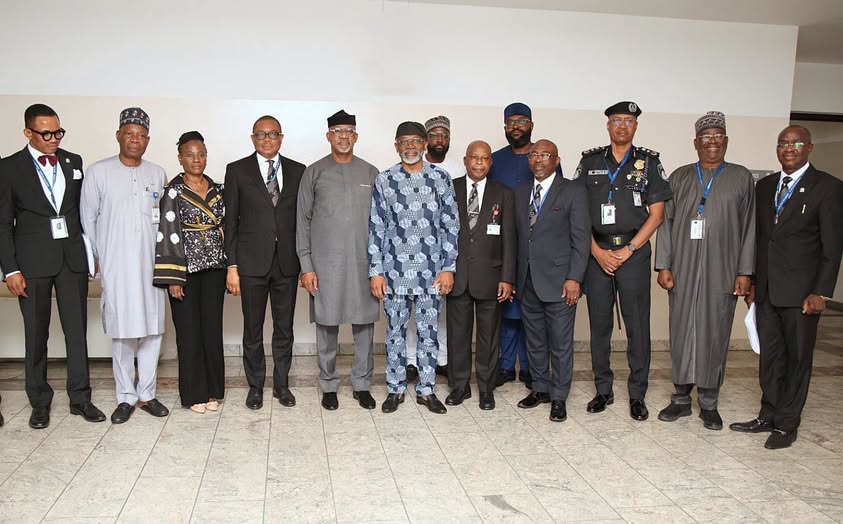
The Federal Government has begun the next stage of plans to establish state police in Nigeria.President Bola Tinubu, represented by his Chief of Staff, Femi Gbajabiamila, inaugurated a Presidential Working Group to prepare the draft National Policing Bill in Abuja.
The move comes after the National Assembly passed the Constitution Alteration (State Police) Bill. The proposed amendment would create a policing structure involving both the Federal Police Service and state police services.
However, the constitutional change alone is not enough. The government says the National Policing Bill will provide the legal and operational framework needed to make state policing work.
Nigeria Begins Work on National Policing Bill
The Presidential Working Group will develop a detailed draft of the National Policing Bill.
The bill is expected to explain how state police services will operate and how they will work with the Federal Police Service.
The group will also consider important issues such as police standards, funding, training, oversight and the protection of citizens’ rights.
What Will the State Police Committee Do?
The working group will focus on several key areas of state policing in Nigeria.
These include:
- Setting minimum standards for state police services.
- Creating requirements for states that want to establish police services.
- Defining how federal and state police will work together.
- Establishing accountability and oversight systems.
- Protecting human rights.
- Addressing funding and personnel arrangements.
- Creating rules for the transition to state policing.
These areas will help determine how the proposed policing system will operate across the country.
Tinubu Says State Police Can No Longer Wait
President Tinubu said Nigeria’s security challenges require a more effective and decentralised policing system.
According to the President, the government should begin preparing the legal framework now instead of waiting until the entire constitutional amendment process is completed.
The move is expected to help the government prepare for the practical challenges that may arise if state police becomes part of Nigeria’s security system.
Who Is On the Working Group?
The Presidential Working Group includes representatives from several important institutions.
They include the Office of the Attorney-General of the Federation, the National Security Adviser, the Inspector-General of Police, the Nigerian Bar Association and the Nigeria Governors’ Forum.
Attorney-General Lateef Fagbemi described the process as timely. He also called on state governors to support the constitutional amendment process by working with their respective Houses of Assembly.
The President of the Nigerian Bar Association, Afam Osigwe, also expressed support for state policing.
He argued that Nigeria’s growing population and security challenges make it increasingly difficult for one national police structure to respond effectively to every local security situation.
How Would State Police Work?
If the proposal becomes law, states would have their own police services alongside the Federal Police Service.
State police officers would focus mainly on security matters within their respective states. The Federal Police Service would continue to handle national responsibilities and security matters that require a wider reach.
The proposed system could also improve communication between security agencies and local communities.
Why Is State Police Important?
Supporters of state police believe the system could make policing more responsive to local security needs.
State police officers may have better knowledge of their communities and could respond more quickly to local threats. They could also work closely with residents to gather information about criminal activities.
However, state policing also raises concerns about political interference.
Some Nigerians worry that state governments could misuse police powers against political opponents or critics. Strong oversight, professional standards and clear rules will therefore be important if state police becomes operational.
What Happens Next?
The Presidential Working Group will continue work on the National Policing Bill and develop a framework for implementing state police.
The constitutional amendment process must also progress through the required stages before the new system can become fully operational.
The success of state policing will depend not only on passing legislation but also on proper funding, training, recruitment, accountability and respect for citizens’ rights.
For now, the government’s decision to begin work on the National Policing Bill represents an important step in Nigeria’s long-running discussion about police reform.
Frequently Asked Questions About State Police in Nigeria
What is state police?
State police would allow individual Nigerian states to establish and manage their own police services while the Federal Police Service continues to operate at the national level.
Why does Nigeria need state police?
Supporters say state police could improve local intelligence, community policing and response times because officers would focus more closely on security issues within their states.
Has state police started operating in Nigeria?
No. The government has begun work on the legal framework, but state police will require the completion of the constitutional and legislative processes before it can operate fully.
What is the National Policing Bill?
The National Policing Bill is expected to provide the rules and framework for how federal and state police services will operate, including issues such as funding, standards, coordination and accountability.
What are the concerns about state police?
One major concern is possible political interference. Supporters and critics agree that strong oversight and clear legal safeguards will be necessary to prevent abuse.
What Nigerians Should Watch
The next major developments will be the progress of the constitutional amendment and the drafting of the National Policing Bill.
Nigerians will also be watching how the government plans to fund state police, recruit officers, provide training and prevent political interference.
If successfully implemented, state police could significantly change the way security services operate across Nigeria.
However, the system will need strong safeguards to ensure that state police officers protect citizens and operate according to the law.
Conclusion
The Federal Government has taken another step towards establishing state police in Nigeria by inaugurating a Presidential Working Group to draft the National Policing Bill.
The proposed bill will address important areas such as state police standards, funding, coordination, oversight and human rights.
Supporters believe state police could improve community policing and help security agencies respond faster to local threats. At the same time, concerns about political interference mean that strong accountability measures will be essential.
As the constitutional amendment and legislative processes continue, the coming months will show whether Nigeria can turn the long-standing proposal for state police into a practical and effective security system.
The Story Mean Say
Federal Government don begin work on the law wey go guide state police for Nigeria. President Tinubu set up committee wey go prepare the National Policing Bill and explain how state police go work, how states go qualify, how dem go fund am and how dem go protect citizens’ rights.
If everything follow the required legal process, states fit eventually get their own police services alongside the Federal Police Service. Supporters believe say state police fit help improve security and make police respond faster to local problems, but strong rules go dey needed to stop political interference and protect Nigerians.