
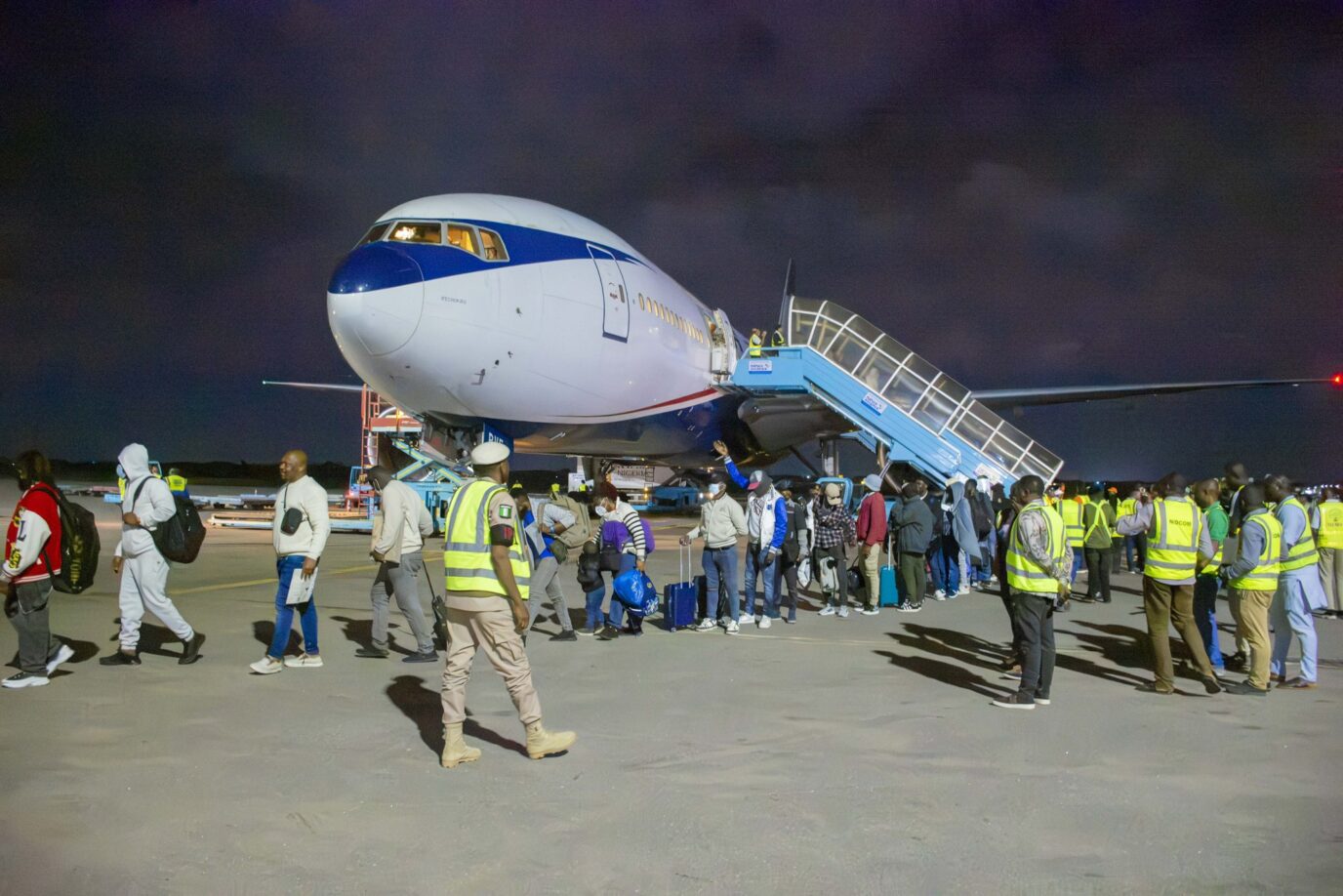
A new batch of 67 Nigerians repatriated from South Africa has arrived in Lagos amid growing concerns over the safety and welfare of Nigerians living in the country.
The returnees arrived at the Murtala Muhammed International Airport in Lagos on Wednesday night aboard a South African Airways flight. The latest repatriation was facilitated by private individuals who supported the Nigerians with their return journey. (Linda Ikeji’s Blog)
According to the Minister of Foreign Affairs, Bianca Odumegwu-Ojukwu, the latest group comprises 30 adults, 34 children and one infant. The returnees came from several Nigerian states, including Lagos, Enugu, Kogi, Ogun, Imo, Oyo, Delta, Edo, Anambra, Osun, Benue, Abia and Kwara. (TheCable)
The repatriation comes amid renewed concerns over xenophobic incidents and protests in South Africa. The Federal Government has expressed concern about reports of attacks and hostility towards foreign nationals, including Nigerians living and working in the country.
The latest group arrived in Nigeria about a week after another 83 Nigerians were repatriated from South Africa. This means at least 150 Nigerians have returned in the two recent repatriation exercises. (TheCable)
Why Are Nigerians Returning From South Africa?
The latest return is linked to concerns over the safety and welfare of Nigerians in South Africa, particularly amid reports of xenophobic incidents and protests targeting foreign nationals.
The Federal Government has continued to monitor the situation while engaging with relevant authorities and communities to protect Nigerian citizens living in South Africa.
Some Nigerians who returned reportedly had to leave behind businesses, properties and other sources of livelihood. The government has therefore appealed to state governments to support the returnees as they begin the difficult process of rebuilding their lives in Nigeria. (TheCable)
Who Are Among the 67 Returnees?
The latest group consists of:
- 30 adults
- 34 children
- One infant
The returnees are from different parts of Nigeria, including Lagos, Enugu, Kogi, Ogun, Imo, Oyo, Delta, Edo, Anambra, Osun, Benue, Abia and Kwara states. (TheCable)
Their return highlights how the impact of insecurity and xenophobic tensions can extend beyond individuals to entire families, including children who may have lived in South Africa for several years.
Who Funded the Repatriation?
Unlike a government-funded evacuation programme, the latest exercise was supported by private individuals.
According to the Foreign Affairs Ministry, private citizens helped facilitate the return of the 67 Nigerians. The coordinator of the exercise, Ikem Ume-Ezeoke, and businessman Charles Mba also addressed the returnees after their arrival.
Each returnee received ₦50,000 as immediate financial support. (TheCable)
The support is expected to help the returnees meet some of their immediate needs as they settle back into Nigeria.
Government Appeals for Support
The Federal Government has called on state governments to assist Nigerians returning from South Africa.
Foreign Affairs Minister Bianca Odumegwu-Ojukwu said many of the returnees had left South Africa after abandoning their livelihoods and properties. She urged state governments to help with relocation, resettlement and other forms of support. (TheCable)
For many of the returnees, returning home may involve starting over after years of building businesses, careers and family lives abroad.
What Does the Development Mean for Nigeria-South Africa Relations?
The repatriation comes at a sensitive time in relations between Nigeria and South Africa.
Both countries have large populations and strong economic links across Africa. Nigerians have established businesses and communities in several South African cities, while South Africa also has major companies operating in Nigeria.
However, repeated reports of xenophobic attacks and anti-foreigner protests have continued to create tension between the two countries.
The Nigerian government has previously raised concerns about the treatment of its citizens in South Africa and continues to engage with South African authorities over the safety of Nigerians.
What Happens to the Returnees Next?
The immediate challenge for the returnees is settling back into Nigeria.
Many will need help finding accommodation, restarting businesses, securing employment and supporting their families. Children returning with their parents may also need assistance with education and adjusting to a new environment.
The Federal Government has therefore encouraged state governments and other stakeholders to provide support to returning Nigerians.
The Koko of the Matter Be Say
Another 67 Nigerians don return from South Africa and land for Lagos after concerns over xenophobic attacks and the safety of foreigners for the country.
The returnees include 30 adults, 34 children and one infant from different states across Nigeria. Private individuals help sponsor the repatriation, and each person receive ₦50,000 to support dem as dem settle back home.
This latest return come about one week after another 83 Nigerians return from South Africa, bringing the number of recent returnees to at least 150.
The Federal Government don appeal to state governments to support the returnees, especially those wey leave their businesses, properties and other things behind for South Africa.
The development also show say Nigeria still needs to work closely with South Africa to protect Nigerians living there and address concerns over xenophobia and the treatment of foreign nationals. (TheCable)