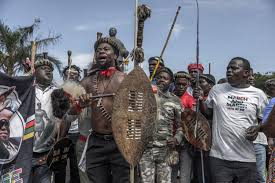

Thousands of demonstrators took to the streets across South Africa on Tuesday as anti-immigration protests gathered momentum following the expiration of a June 30 deadline issued by activist groups calling for undocumented migrants to leave the country.
The demonstrations, held in major cities including Johannesburg, Durban, and Cape Town, prompted a massive security response as police and other law enforcement agencies were deployed to prevent violence and protect lives and property. Authorities urged protesters to remain peaceful and warned that anyone involved in intimidation or attacks would face the full weight of the law.
Heavy Security Presence Across Major Cities
South African police maintained a visible presence in several cities as businesses owned by both locals and foreign nationals closed their doors amid fears of unrest.
Security officials said the deployment was intended to prevent a repeat of previous outbreaks of xenophobic violence that have claimed lives and displaced thousands of people in the past. While many demonstrations remained peaceful, reports of isolated confrontations and harassment of foreign nationals emerged in some communities.
What Is Behind the Protests?
The protests were organised by anti-immigration movements, including the group known as March and March, which has accused the government of failing to tackle illegal immigration.
The groups argue that undocumented migration contributes to unemployment, crime, and pressure on public services. However, many economists, researchers, and human rights organisations say South Africa’s economic challenges are far more complex and cannot be blamed solely on migrants.
The June 30 deadline frequently mentioned during the protests was not issued by the South African government. Instead, it was an unofficial ultimatum announced by activist groups. South African authorities have repeatedly clarified that only the government has the legal authority to enforce immigration laws and have described online notices claiming otherwise as false.
Foreign Nationals Leave Amid Rising Fear
The growing tension has led thousands of foreign nationals—including citizens of Nigeria, Malawi, Zimbabwe, Ghana, and Uganda—to seek assistance from their embassies or voluntarily return to their home countries.
Several African governments have already begun evacuation and repatriation efforts after many migrants reported feeling unsafe following weeks of anti-immigrant demonstrations and isolated attacks. Nigeria recently welcomed additional batches of citizens evacuated from South Africa as part of its voluntary repatriation programme.
Many migrants said they decided to leave out of fear rather than because of any official government order, with some abandoning jobs and businesses they had built over several years.
Government Calls for Calm
President Cyril Ramaphosa has appealed to South Africans to remain peaceful and avoid taking immigration enforcement into their own hands.
He acknowledged concerns about illegal immigration but stressed that law enforcement agencies—not private groups or individuals—are responsible for enforcing the country’s immigration laws.
Officials also warned against violence, intimidation, and the spread of misinformation capable of inflaming tensions further.
A Test for Regional Relations
The latest protests have attracted attention across Africa, particularly because South Africa hosts one of the continent’s largest migrant populations.
Analysts say the situation could have wider diplomatic implications if attacks on foreign nationals continue, especially as neighbouring countries work to evacuate their citizens.
While many protesters insist their campaign is directed only at undocumented migrants, human rights organisations have expressed concern that even legally documented foreigners have reported harassment and discrimination during the demonstrations.
As authorities continue monitoring developments, attention remains focused on whether the demonstrations will remain peaceful and how the government will address both immigration concerns and the country’s broader economic challenges.
The Koko of the Matter Be Say 🇳🇬
Thousands of people don march for different parts of South Africa after anti-immigration groups set June 30 as deadline for undocumented migrants to leave the country.
Police spread across major cities like Johannesburg and Durban to stop violence, while many foreign nationals—including Nigerians—close their shops or decide to return home because of fear. South African government don make am clear say the June 30 deadline no be official government order, and only the government get power to enforce immigration laws.
Even though many of the protests remain peaceful, authorities don warn say anybody wey attack or intimidate foreigners go face the law. Many African countries, including Nigeria, don continue to help citizens wey choose to return home because of the growing tension.