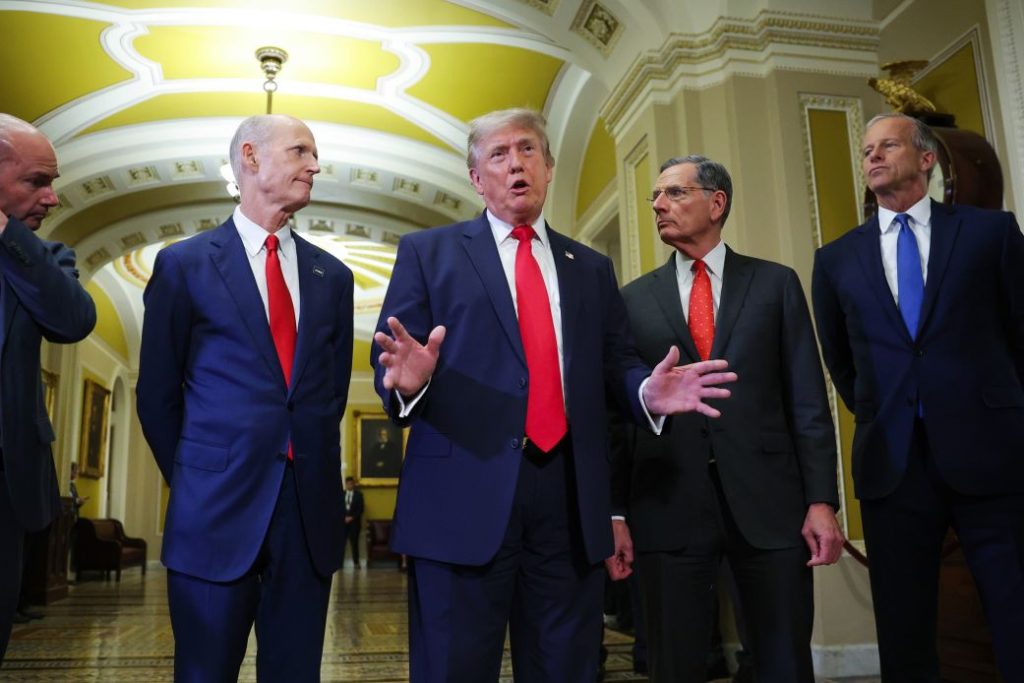

The U.S. Senate has reportedly walked back its earlier rebuke of President Donald Trump over the Iran war, marking a dramatic shift in the political debate surrounding the conflict.
Just days earlier, the Senate had voted 50-48 in favor of a war powers resolution aimed at limiting Trump’s ability to continue military operations against Iran without congressional approval. The vote was widely viewed as a rare bipartisan challenge to the president’s authority and reflected growing concerns within Congress about the conflict.
However, following private briefings and intense lobbying efforts by the White House, some Republican senators who had supported efforts to constrain Trump’s war powers reversed their positions. Reports indicate that the Senate subsequently backed away from its earlier stance, handing Trump a symbolic political victory and signaling renewed support for his handling of the Iran situation.
According to reports, senators who changed their positions said additional information provided during classified briefings influenced their decision. The reversal was welcomed by the Trump administration, which argued that flexibility was needed to manage national security challenges and ongoing negotiations involving Iran.
The development highlights continuing divisions within Washington over presidential war powers, congressional oversight, and U.S. policy toward Iran. While critics argue that Congress should play a greater role in authorizing military action, supporters of the president maintain that swift executive action is sometimes necessary during international crises.
Summary
The U.S. Senate has retreated from its earlier rebuke of President Trump over the Iran war after some lawmakers reversed their positions following White House briefings. The move represents a political win for Trump and underscores ongoing debate over war powers and congressional oversight.
Pidgin Summary
U.S. Senate don soften its earlier stand against President Trump over the Iran war. Some senators wey first support measures to limit Trump’s war powers later change their minds after meetings and briefings from the White House. The development na political victory for Trump and e show say argument over who get power to approve war never end.